
America's "New [Insert Adjectives Here] Global Trade Order"
Short-term announcements aside, the true test rests in whether it delivers more peace and prosperity over time.

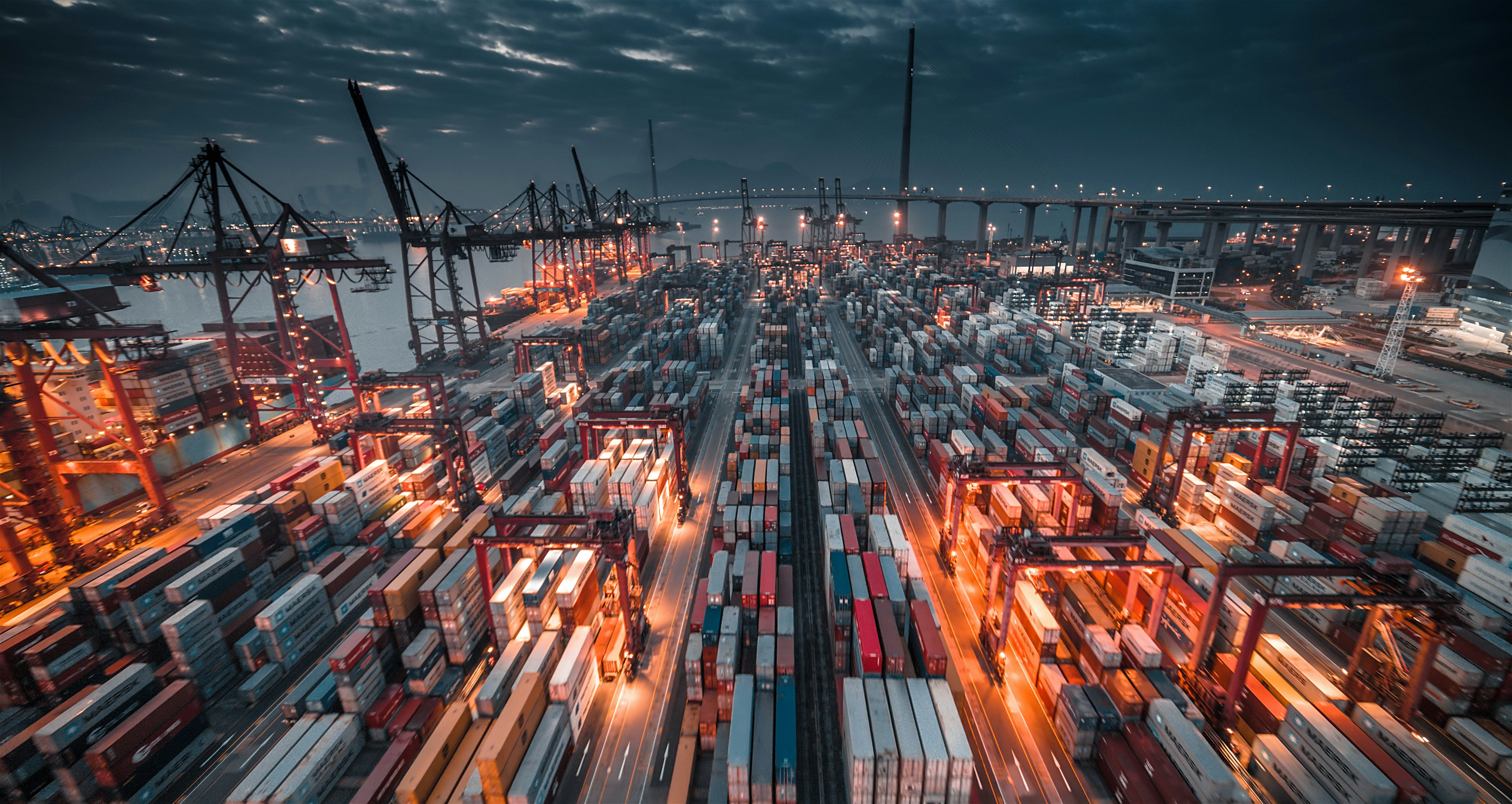
“He made the U.S. presence known, and it wasn’t just about waving the flag,” says Jamieson Greer, the U.S. Trade Representative, about the president’s swing through Asia last week. “It was also about rallying our friends and allies around a new global trade order.”
If our trade negotiators no longer use the words “rules-based” before the words “trade order,” it’s because Donald Trump insists the multilateral agreements that Washington championed for decades have left Americans worse off. But the impressive list of economic agreements he announced offers fresh perspective on the future of U.S. commercial diplomacy.
The ultimate test of this sharp-elbowed approach will be in its success in bringing more peace and prosperity to the United States. So far, however, it all feels a little short-sighted and selfish.
Loyal readers will recall that I have forsworn writing about the words “postwar rules-based order,” partly because it triggers an instant reflex to swipe left and partly because the current speed of technological change requires completely different ways of assessing the familiar balance of power.
But if “rules-based” is no longer acceptable at the White House, then we should explore the adjectives that fit America’s new strategy better.
Consider, for example,
Bilateral. Rather than gathering a bunch of countries to work out standard trade practices, this administration clearly prefers to get a single country in a room alone. Even with every regional leader in Kuala Lumpur for an Association of Southeast Asian Nations (ASEAN) Summit last weekend, Trump announced separate understandings with Malaysia, Cambodia, Thailand and Vietnam. Perhaps it comes from the president’s misguided focus on bilateral trade balances as the measure of whether the other side is playing fair. Or maybe there’s just a sense it’s easier to strike a deal without having to build a broad consensus. That broad consensus, of course, is what often makes deals stick.
Transactional. All agreements involve an exchange of promises, and here the president has secured promises to reduce barriers in return for some relief on the steep tariffs he has imposed. But the success of trade deals depends less on written commitments and more on the relationship that develops from them. Both sides need to find ways to manage evolving trade flows and technological advances through the vagaries of their own domestic politics and interest groups. This requires a level of ongoing trust and commitment that no document can capture.
Lopsided. From Malaysia to Japan to South Korea, leaders agreed to reduce most of their tariffs on U.S. imports to zero, while accepting tariffs of around 20% for most of their exports to America. While they made general commitments to remove non-tariff trade barriers, Washington made remarkably few promises in return. With a GDP per capita roughly a tenth of America’s, Malaysia is even committed to investing $70 billion in the U.S. over the next decade. The exception to this pattern, of course, came in the temporary truce agreed with China, which looks far less lopsided than the deal Trump secured with Beijing during his first term.
Unpredictable. How much of the president’s temper is genuine or performative, there’s no question that it gives him an edge in these new negotiations. In Japan, it leads a new prime minister to nominate him for the Nobel Peace Prize and the South Korean president to present him with a golden crown. More importantly, the possibility of a sharp tariff hike due to a Brazilian court decision or a Canadian television commercial keeps all trading partners on their toes. Some have decided it’s worth paying the price just to access the world’s largest market. They have also started looking for alternative markets to hedge their bets.
The ultimate test of this sharp-elbowed approach will be in its success in bringing more peace and prosperity to the United States. So far, however, it all feels a little short-sighted and selfish.
Vigilante. A noun used as an adjective, this best describes America’s new approach of setting rules for which it also acts as judge and enforcer. Condescending trade experts like to point out that the president’s deals are laughably vague when it comes to enforcement mechanisms, but they miss the point. Too much clarity would limit the administration’s room for maneuver. At the same time, the ability to threaten and implement tariffs at any level for any reason makes these deals easily enforceable from Washington’s viewpoint. That is, unless the Supreme Court decides otherwise.
So the next time Trump or Greer speaks of a “new global trade order,” remember what they mean is a “new bilateral, transactional, lopsided, unpredictable and vigilante trade order.” But every action in global affairs triggers a reaction. If our new demonstration of brute diplomatic force delivers more for the American people in the short run, it’s worth asking how our friends and allies will react over the next 5 or 10 years.
Then it’s worth asking what our adversaries may do.
Good question. Few other countries have the capacity to deal bilaterally with each and every country in the world, China of course being one. China can use its real leverage to push back and impose conditions of its own on the US, as we saw. Most other countries will be incentivized to band together and join forces, to better meet power with power, and leverage with leverage. This banding together against us (and China?) will be one characteristic of the post trade order that dare not say its name. Unintended consequence or obvious byproduct of a myopic strategy?